

PgHero is an open-source performance tool for Postgres that can help you find and fix data issues, using a dashboard interface.
A quick look at the interface gives you an idea of what you'll find in PgHero.
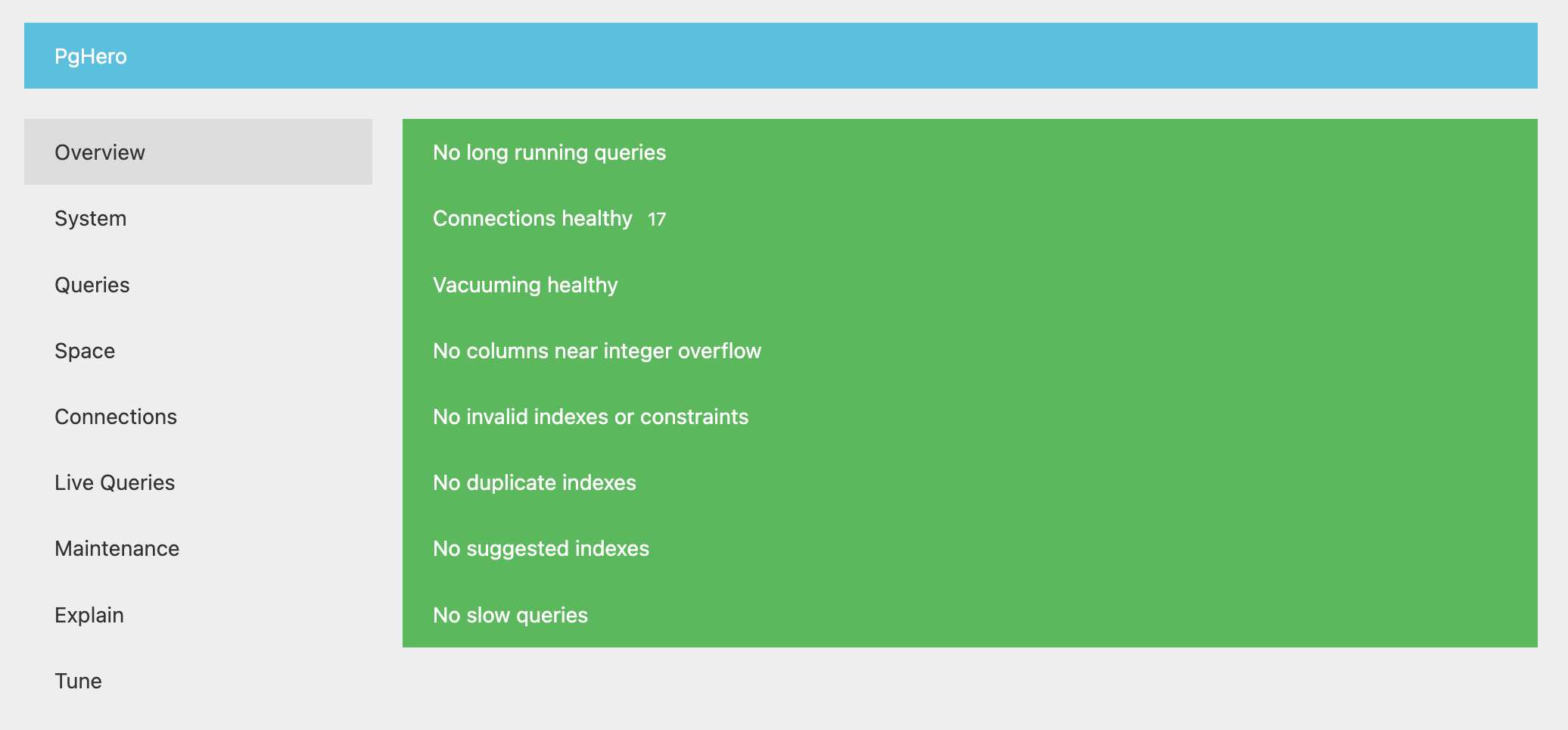
Among other things, you can use PgHero to:
- Identify long-running queries
- Identify tables that require vacuuming
- Identify duplicate or missing indexes
- View connections by database and user
- Explain, analyze, and visualize queries
note
OptiTech does not currently support monitoring tools or platforms that require installing an agent on the Postgres host system, but please keep an eye on our roadmap for future integrations that enable these monitoring options.
How to install PgHero
PgHero supports installation with Docker, Linux, and Rails. Here, we'll show how to install PgHero with Docker and connect it to a OptiTech database.
Before you begin:
- Ensure that you have the pg_stat_statements extension installed. PgHero uses it for query stats.
- Ensure that you have Docker installed. See Install Docker Engine for instructions.
PgHero is available on DockerHub. To install it, run:
docker pull ankane/pgheroHow to connect to your database from PgHero
Find the connection string for your database by clicking the Connect button on your Project Dashboard.
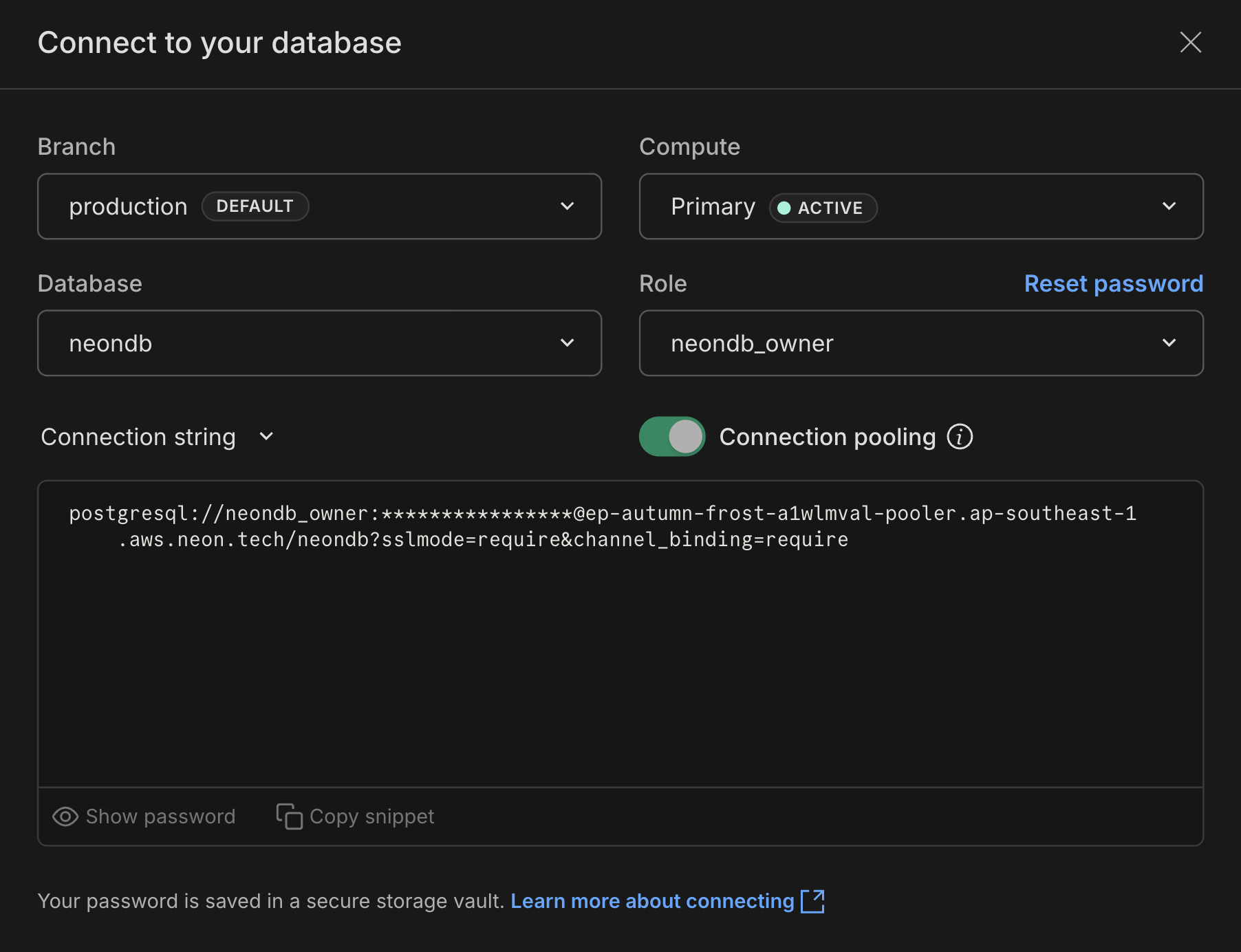
Finally, run this command, replacing $OPTITECH_DB with your OptiTech database connection string.
docker run -ti -e DATABASE_URL='$OPTITECH_DB' -p 8080:8080 ankane/pgheroThen visit http://localhost:8080 in your browser to open the PgHero Dashboard.
Need help?
Join our Discord Server to ask questions or see what others are doing with OptiTech. For paid plan support options, see Support.